
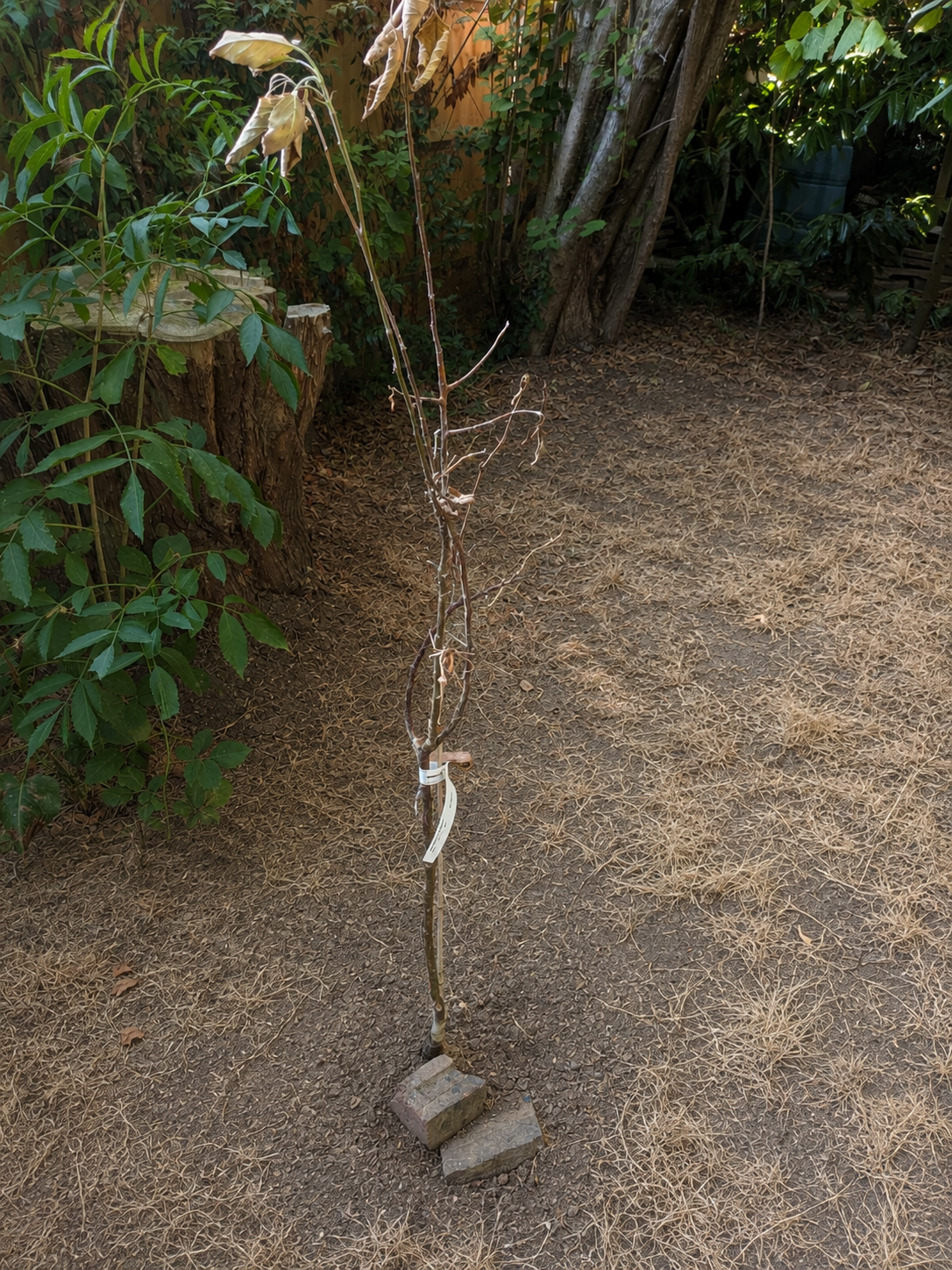
If you’re asking yourself ‘is my tree dying from drought’ this summer, you’re not alone. If a tree or shrub in your garden has dropped its leaves early, gone brown, or looks lifeless after this summer’s heat, it’s easy to assume the worst. But just like lawns, many trees and shrubs respond to drought by shutting down rather than dying outright. Here’s how to work out what’s actually going on, and what to do about it.
Is my tree dying from drought, or just resting? Why plants ‘play dead’.
When water is scarce, many trees and shrubs drop leaves early or let them brown and curl as a survival tactic. Losing leaves reduces the surface area through which the plant loses water, so it’s a way of conserving resources rather than a sign the plant has given up. This is especially common in:
- Birch, beech, and horse chestnut (often among the first to show drought stress)
- Roses and many flowering shrubs, which will drop leaves and flower buds to protect the root system
- Newly planted trees and shrubs (under 2–3 years old), which haven’t yet established a deep enough root system to cope with dry spells
How to tell if it’s stressed or actually dead
The scratch test
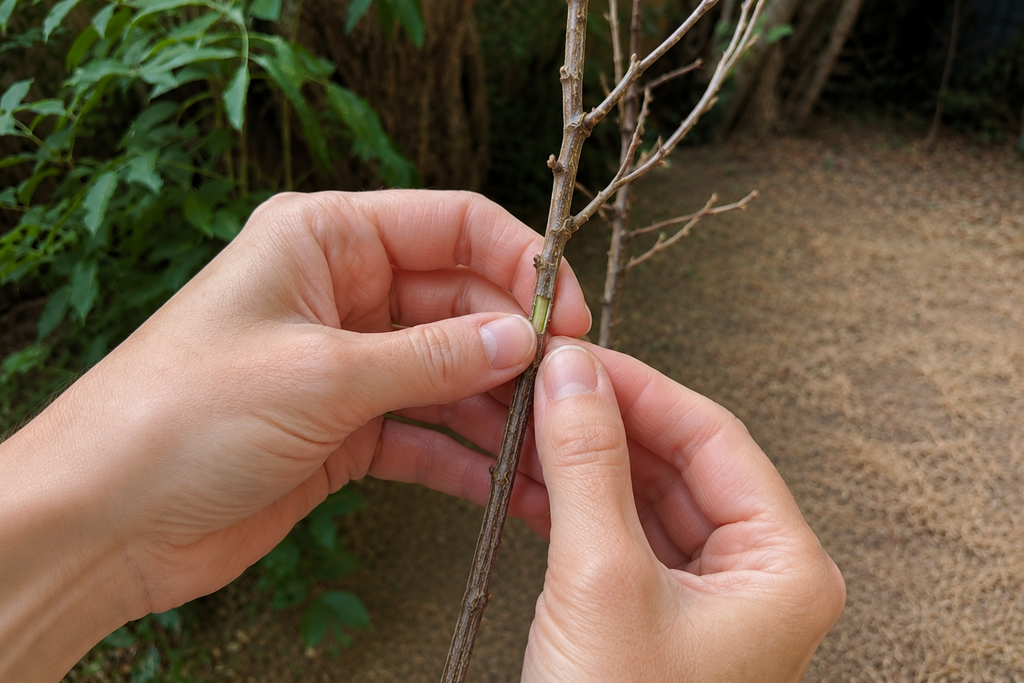
Pick a few smaller stems and gently scratch away a sliver of bark with your fingernail or a knife. Underneath:
- Green or pale tissue means that part of the plant is alive
- Brown, dry tissue means that section has died back
Test a few different branches, starting from the tips and working toward the base, since a plant can have dead outer growth while the core is still alive.
Check the buds
Even on a bare-looking tree or shrub, look closely at the stems for next year’s buds. Small firm buds along the branches are a strong sign the plant is alive and simply resting, even if every leaf has dropped.
Look at timing
Leaf drop that happened gradually over a hot, dry stretch is far more likely to be stress-related dormancy. Sudden, all-at-once leaf death combined with brittle, snapping stems is more concerning and worth investigating further.
What NOT to do right now
- Don’t prune back “dead-looking” growth immediately. Wait until you’ve confirmed with the scratch test — premature pruning can remove branches that would have recovered.
- Don’t fertilise stressed plants. As with lawns, feeding a plant in survival mode pushes it to put out new growth it doesn’t have the water reserves to support.
- Avoid heavy watering all at once. A deep, slow soak once or twice a week is far more effective than frequent light watering, which only wets the surface and encourages shallow roots.
What to do as autumn arrives
1. Give it time
Many trees and shrubs that look dead in August will produce fresh growth the following spring once they’ve had a proper autumn and winter to recover. Don’t make final decisions about removing a plant until at least next spring, unless the scratch test confirms it’s dead throughout.
2. Water deeply through early autumn
Even once temperatures drop, a dry autumn can prevent proper recovery. Continue deep watering (especially for anything planted in the last 2–3 years) until regular rainfall is established.
3. Mulch around the base
A generous layer of mulch (bark, compost, or well-rotted manure) around the base — but not touching the stem — helps retain soil moisture and protects roots as the plant heads into winter.
4. Hold off on pruning until late winter
If sections are confirmed dead via the scratch test, it’s usually best to wait until the plant is fully dormant in late winter (January–February) before pruning out the dead wood, once you can see the full extent of what didn’t survive.
When it’s genuinely time to replace
A plant is more likely to be beyond recovery if:
- The scratch test shows brown, dry tissue all the way down to the base and main stem
- There’s no sign of bud growth anywhere on the plant by early spring
- The bark is peeling away easily from the wood underneath, or the wood underneath is dry and crumbly rather than pliable
If you do need to replace a tree or shrub, it’s worth using the opportunity to choose something more drought-resilient for next time — we’ll cover drought-tolerant plant choices for UK gardens in the next guide.
The bottom line
A brown, leafless tree or shrub after a hot summer is very often dormant rather than dead. The scratch test and a check for live buds are the most reliable ways to know for sure. Where possible, hold off on drastic decisions until spring, and focus your efforts now on deep watering and mulching to support recovery through autumn and winter.
Leave a Reply