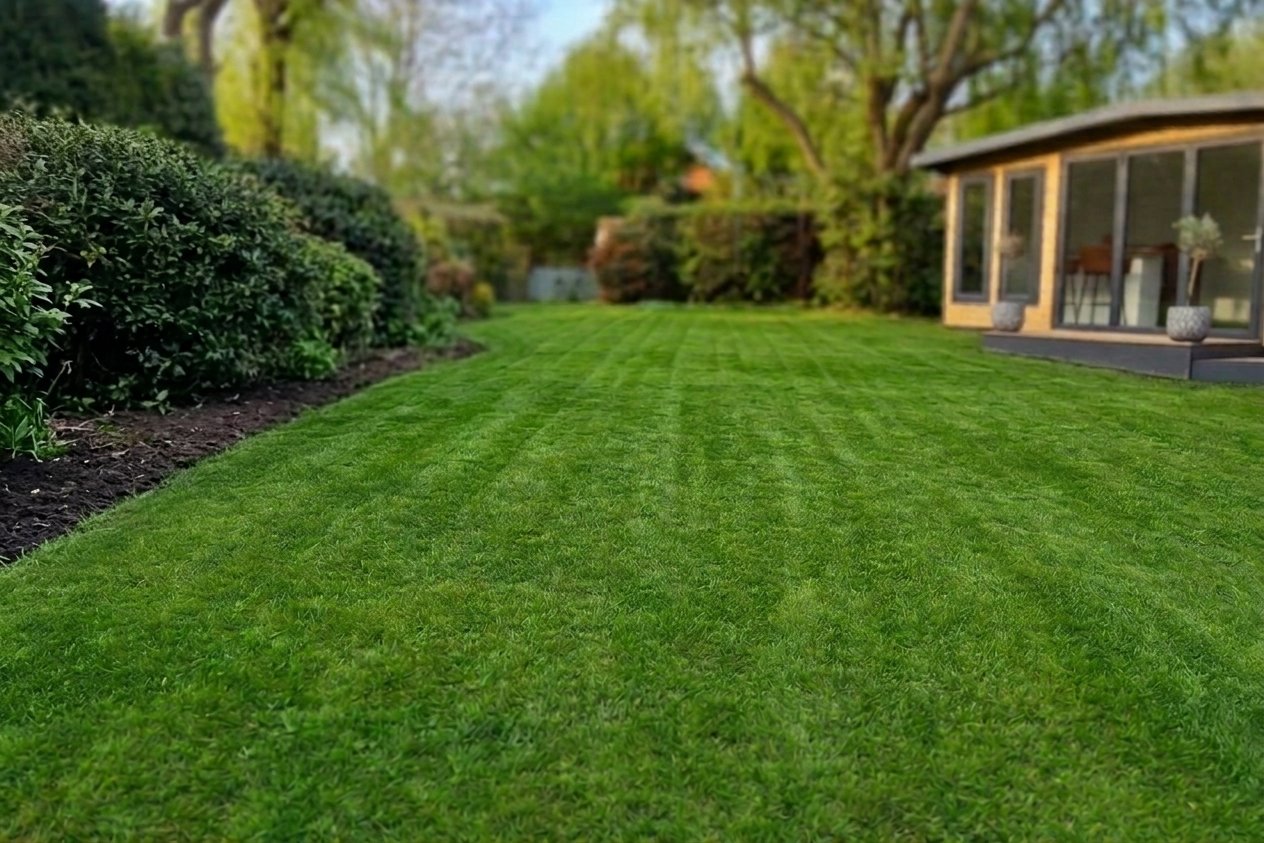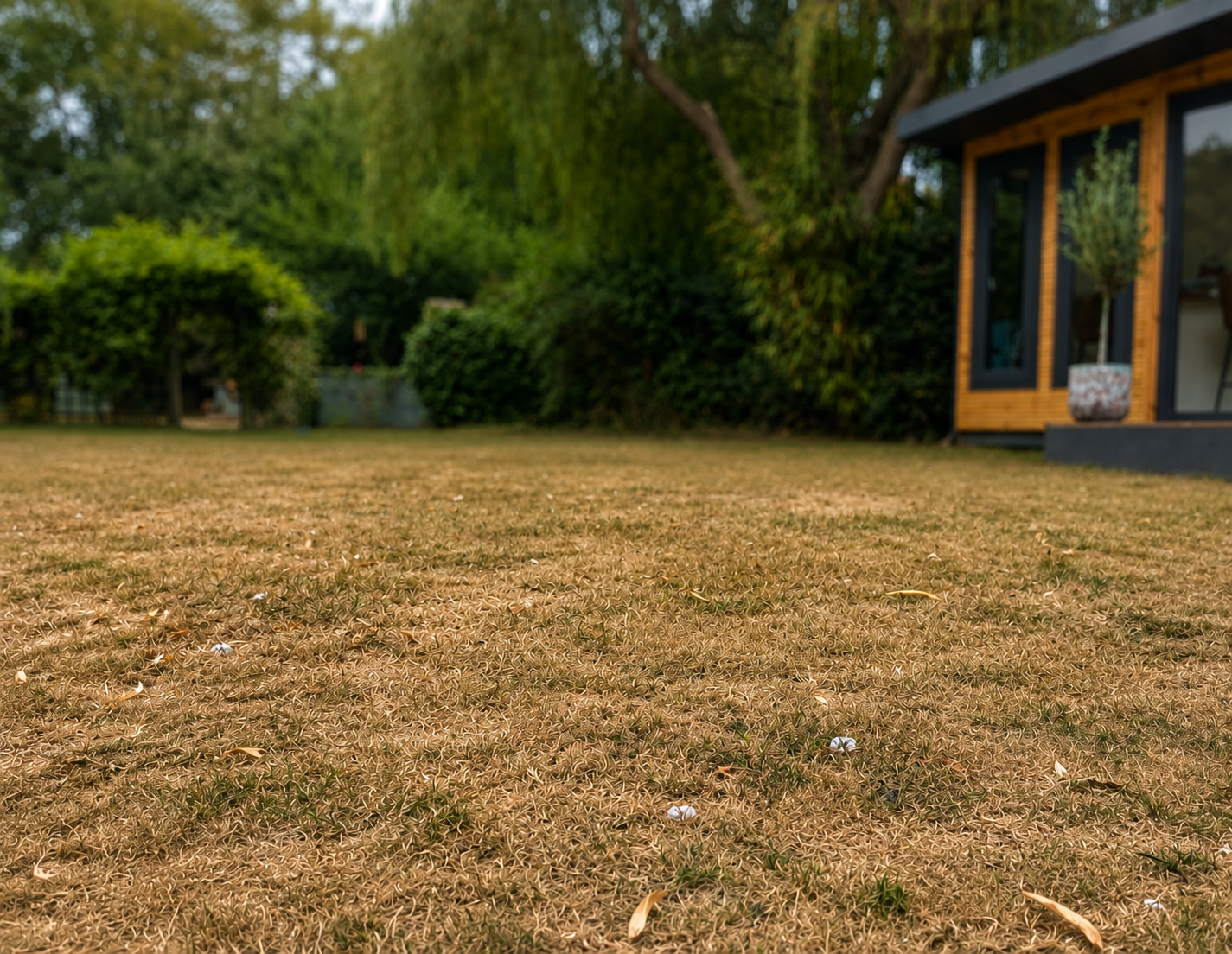

If you’re staring at a brown, crunchy lawn wondering about lawn recovery time after a dry summer, the honest answer is: it depends, but usually less time than you’d think. Most UK lawns bounce back within a few weeks of consistent rain or watering, though full recovery to a thick, healthy sward can take longer. Here’s a realistic timeline, and what actually speeds it up.
QUICK LAWN RECOVERY LIST
- Slow release granular fertiliser: Envii Granular Lawn Feed Fertiliser
- Garden fork: Traditional Stainless steel digging fork for loosening compacted soil
- Grass seed: Lawn Shade & Drought Tolerant Grass Seed
The first sign of recovery: 7-14 days
Once decent rainfall returns (or you’re watering consistently), most dormant grass starts showing green shoots within one to two weeks. This is the grass breaking dormancy, not full recovery — you’ll see thin streaks of green appearing through the brown, usually starting in shadier or slightly damper patches first.
If you see zero green after two to three weeks of consistent moisture, that’s a sign some areas may have genuinely died rather than gone dormant, and those patches will need reseeding rather than just waiting.
Visible green cover: 3-4 weeks
By three to four weeks after rain returns, most lawns show clear, patchy green growth across the majority of the area. It won’t look thick or even yet, but the “is this lawn dead” question is usually answered by this point — if you’re seeing meaningful green, the lawn is recovering, not gone.
A lawn that looks normal again: 6-8 weeks
This is typically when a recovering lawn starts to look properly green and reasonably even again, assuming consistent moisture throughout. Mowing can usually resume around this point too, once grass has reached 5-7cm, with the blade set high for the first few cuts to avoid stressing regrowth.
Full density and strength: into next spring
Here’s the part that surprises people: even once a lawn looks fully recovered, the root system underneath often hasn’t caught up. A lawn that was drought-stressed this summer typically doesn’t reach full root depth and density again until well into the following spring, after a proper winter of undisturbed growth. This is exactly why autumn feeding, aeration, and any reseeding matter so much — they’re setting up next year’s resilience, not just fixing this year’s appearance.
What speeds recovery up
Consistent, not occasional, moisture
Grass recovers faster with steady, moderate watering than with infrequent heavy soaking. If you’re not relying on rainfall alone, a light daily watering with a watering can over the first couple of weeks does more for recovery than one big soak followed by nothing.
Aeration on compacted soil
If your lawn sees regular foot traffic, compacted soil can slow recovery significantly, since water and air struggle to reach the roots. Aerating with a garden fork, pushed in every 10-15cm and gently rocked, opens up the soil and speeds up how quickly moisture reaches the root zone.
Avoiding traffic on recovering grass
As tempting as it is, keeping foot traffic off a recovering lawn for the first few weeks makes a real difference. Stressed grass has far less resilience than healthy grass, and repeated walking on it while it’s trying to recover can set growth back noticeably.
Not over-fertilising too early
It’s tempting to reach for fertiliser the moment green appears, but feeding too early — before the root system has caught up with the visible growth — can push soft top growth the roots aren’t ready to support. Wait until the lawn has genuinely established some green cover before feeding, then use a slow-release granular feed rather than a fast-acting one.
When to reseed instead of waiting
If, after three to four weeks of consistent moisture, certain patches show no green at all while the rest of the lawn is clearly recovering, those specific areas have likely died rather than gone dormant. Rather than waiting indefinitely, it’s usually more effective to reseed those patches directly. See our guide on the best time to reseed a lawn after a dry summer for how to time and prepare that properly.
The bottom line
Whatever your lawn’s recovery time after a dry summer turns out to be, most UK lawns show the first signs of recovery within two weeks of consistent moisture, look genuinely green again within a month, and feel properly back to normal within six to eight weeks — but the deeper root recovery that makes a lawn truly resilient continues well into the following spring. Patience, consistent watering, and avoiding the temptation to rush fertiliser or mowing all help the process along.