
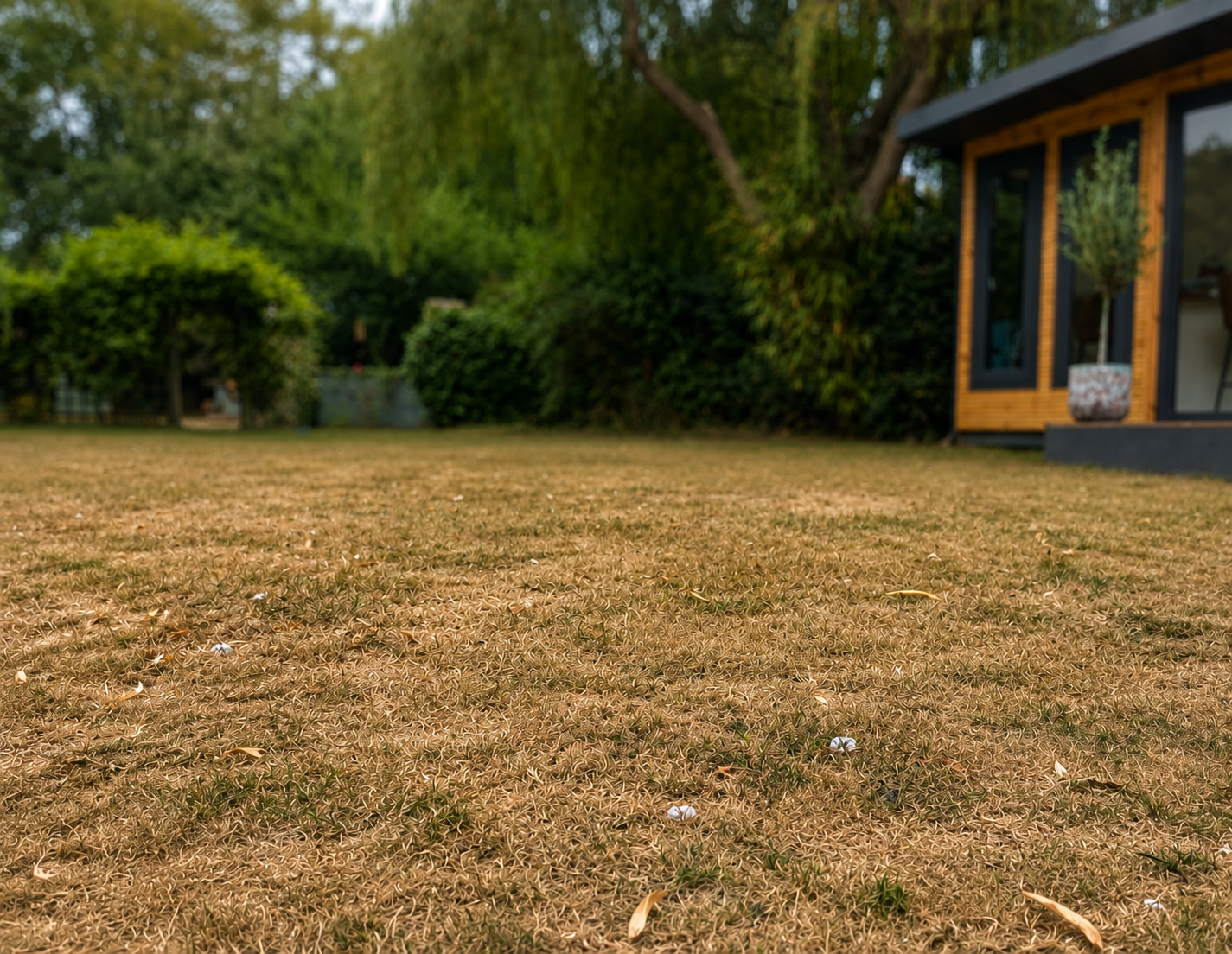
If your lawn is scorched, brown, brittle, or patchy after this summer’s heat, you’re far from alone. Most UK gardens weren’t built for the kind of extended dry heat we’ve had this year, and lawns are usually the first thing to show it. The good news: in the vast majority of cases, a scorched lawn isn’t dead — it’s dormant. Here’s how to tell the difference, and what to actually do about it.
Quick Lawn Recovery List
1. Drought Tolerant Grass Seed
Ideal for repairing patches and restoring a lush, thick green colour to scorched grass.
Check Price on Amazon →3. Thatch Rake
For removing the tight layer of dead grass, moss and roots between your lawn and roots.
Check Price on Amazon →Is your lawn dead, or just dormant?
Grass is remarkably good at surviving drought by shutting down. When water becomes scarce, most UK lawn grasses (particularly perennial ryegrass, which makes up most UK lawn seed mixes) stop growing and turn brown to conserve energy in the roots. This is a survival strategy, not death.
A quick test: pull gently on a few blades of grass in the worst-affected patch. If the grass comes away easily at the roots with no resistance, that area may be dead. If it holds firm, it’s very likely just dormant and will green up again once rain returns and temperatures drop.
Another sign of dormancy versus death: patchiness. Genuinely dead lawns tend to have bare soil showing through. Dormant lawns look uniformly straw-coloured but the ground underneath is still covered.
What NOT to do right now
- Don’t panic-water in the middle of the day. Watering a dormant lawn heavily during a heatwave can shock it and won’t help much — the soil surface is often too hot for water to be absorbed effectively before it evaporates.
- Don’t scalp it with the mower. Cutting dormant grass too short removes its remaining energy reserves and exposes the crown of the plant to more heat stress.
- Don’t fertilise a heat-stressed lawn. Fertiliser encourages new growth, which is the last thing a plant in drought survival mode needs. Wait until it’s actively growing again.
What to do as the weather cools
1. Wait for the first proper autumn rain
Before doing anything drastic, give your lawn two to three weeks after consistent rain returns. A surprising amount of “dead” lawn will green back up on its own once temperatures drop and moisture is available again.
2. Rake out the dead thatch
Once you’ve confirmed which patches are genuinely dead (not just dormant), rake out the dead grass and debris. This is called scarifying, and it lets air, water, and light reach the soil so new seed or recovering grass can establish properly.
3. Aerate compacted soil
Drought-stressed lawns often have compacted, hard soil. Spiking the lawn with a garden fork (or a hollow-tine aerator for larger areas) every 10–15cm helps water and air penetrate down to the roots rather than running off the surface.
4. Overseed bare or thin patches
For any genuinely dead patches, early-to-mid autumn (September into October, while soil is still warm from summer but rainfall is more reliable) is the best window in the UK for overseeding. Use a good quality UK lawn seed mix, and consider a drought-tolerant blend containing fescues if you want more resilience for next summer.
5. Top-dress with compost
A thin layer of screened topsoil or compost worked into the aerated, overseeded areas improves the soil’s ability to hold moisture for next year, and gives new seedlings a better start.
Preventing this next summer
If this is the second or third summer your lawn has struggled, it may be worth reconsidering the lawn itself rather than repeating the same repair cycle every autumn. A few options worth looking into:
- Drought-tolerant grass seed mixes — blends with a higher proportion of fescue grasses cope with dry spells far better than standard ryegrass lawns
- Reducing lawn area — replacing the most stress-prone patches (often thin soil over old rubble, or south-facing slopes) with gravel or drought-tolerant planting
- Leaving grass longer year-round — mowing at a higher setting (7.5cm+) shades the soil and roots, reducing moisture loss significantly
We’ll cover drought-tolerant grass seed and lawn alternatives in more depth in a follow-up guide.
The bottom line
Most scorched UK lawns recover on their own once autumn rain arrives — the key is patience, not intervention. Hold off on drastic action until you can see what’s actually alive, then focus on scarifying, aerating, and overseeding the genuinely dead patches while the soil is still warm enough for new grass to establish.
Related Reading
If your lawn needs more attention after this summer, these might help too:
Leave a Reply