Knowing when to prune hydrangeas matters more than with almost any other shrub, because get the timing wrong on the wrong type and you can cut off an entire year’s flowers before they’ve even had the chance to form. Unlike roses, where most types share a similar pruning window, hydrangeas split into two very different camps — and mixing them up is the single most common reason a hydrangea “never flowers.”
The Short Answer
Most popular hydrangeas — mophead and lacecap — are pruned in early spring (March), not autumn or winter. A smaller group — paniculata and smooth hydrangeas — are pruned in late winter (February to early March), and can take a much harder cut.
The one thing almost every hydrangea has in common: don’t prune in autumn or winter, even though it might feel like the natural time to tidy up.
Why Timing Matters So Much
Hydrangeas fall into two groups based on where they form their flower buds:
- Old wood flowerers (mophead, lacecap, oakleaf, climbing hydrangea) set next year’s flower buds in late summer, on the current season’s stems. Prune these in autumn or winter and you cut off the very buds that were about to become next year’s flowers.
- New wood flowerers (paniculata, smooth/annabelle types) flower on growth made that same spring. These can be pruned hard in late winter without losing flowers, because the flowering stems haven’t grown yet.
If you don’t know which type you have, the safest assumption is old wood — most garden hydrangeas sold in the UK are mopheads or lacecaps.
When to Prune, By Hydrangea Type
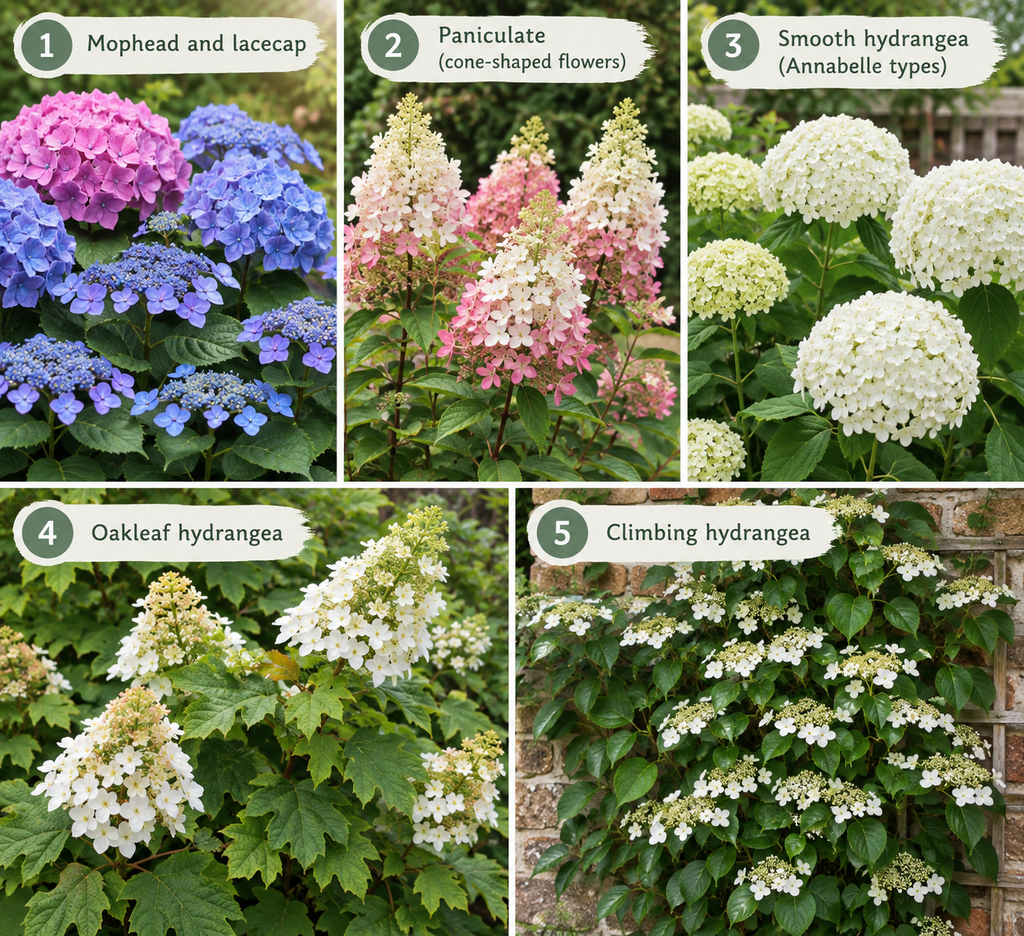
Mophead and lacecap hydrangeas (most common) (1) Prune in March, once you can see new leaf buds forming. Remove old flower heads (leave them over winter — they protect the buds beneath from frost), cut back to the first strong pair of buds below the old flower head, and remove one or two of the oldest stems at the base each year to keep the plant renewing itself.
Paniculata hydrangeas (cone-shaped flowers) (2) Prune in February to early March, before new growth starts. These can take a hard prune — cut back to a low framework of stems, around 30–60cm from the ground. The harder you prune, the fewer but larger the flower heads will be.
Smooth hydrangeas (Annabelle types)(3) Similar to paniculata — prune hard in late winter, cutting close to the ground if you want large, dramatic flower heads, or leave a taller framework for a more natural look.
Oakleaf hydrangeas (4) Treat like mophead — old wood flowerer, so prune lightly in spring if needed, removing only dead or crossing stems. They don’t need much pruning at all.
Climbing hydrangeas (5)Rarely need pruning. If needed, do it right after flowering in summer, and only to control size or remove dead growth.
What You Can (and Can’t) Do Right Now
If you’re looking at your hydrangeas now, wondering whether to get ahead of the job:
You can:
- Deadhead if you want a tidier look, but leave some flower heads on for winter frost protection if you’re in a colder or exposed spot
- Remove any clearly dead or diseased stems
- Tidy fallen leaves around the base to reduce fungal disease risk
Avoid:
- Any real pruning of mophead, lacecap, oakleaf, or climbing types now — this is exactly the mistake that costs people a year of flowers
- Cutting back paniculata or smooth types now either — while they’re more forgiving on timing than mopheads, there’s no benefit to pruning before late winter, and you risk frost damage to any new cuts
Common Mistakes
- Pruning mopheads/lacecaps in autumn or winter — by far the most common reason a hydrangea suddenly stops flowering
- Removing spent flower heads too early — they protect next year’s buds from frost over winter
- Treating every hydrangea the same — a paniculata and a mophead need almost opposite approaches
- Not knowing which type you have — worth checking a plant label or asking before you cut, since guessing wrong costs a whole season
Recommended Gear for Hydrangea Pruning
1. Bypass Secateurs
Clean cuts on healthy stems reduce disease risk — the same tool you’d use for roses.
Check Price on Amazon →2. Garden Gloves
Not thorny like roses, but gloves protect against sap and rough older bark.
Check Price on Amazon →3. Plant Labels
Small but useful — knowing your exact hydrangea type is half the battle with pruning timing.
Check Price on Amazon →Quick Recap
- Mophead, lacecap, oakleaf, climbing: prune in March, lightly
- Paniculata, smooth (Annabelle): prune in February–March, can go hard
- Never prune any type in autumn or winter
- If unsure of your type, treat it as old wood and wait until spring
Related Reading
If you’re planning other autumn and winter garden jobs, these might help too: