
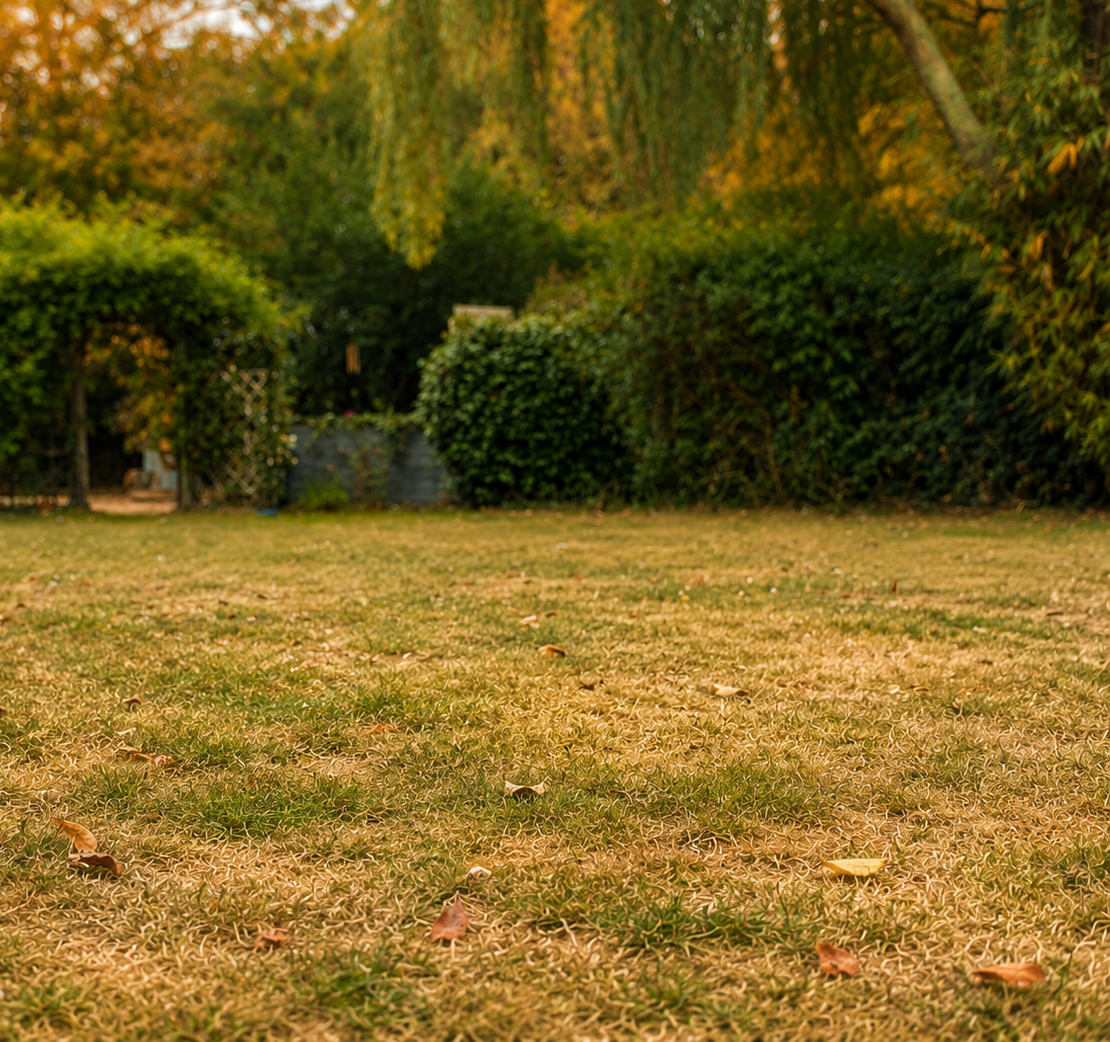
If you are trying to work out how to reseed a lawn after a dry summer, timing is everything. If your lawn came out of this summer patchy, thin, or bald in places, you’re probably wondering when it’s actually safe to reseed. Get the timing right and new grass establishes quickly with minimal fuss. Get it wrong — too early, too late, or into soil that isn’t ready — and you can end up throwing seed down twice. Here’s the best time to reseed a lawn after a dry summer, and how to give it the best possible start.
Why timing matters more than you’d think
Grass seed needs three things to germinate reliably: warm soil, consistent moisture, and enough time to establish roots before winter dormancy sets in. Straight after a dry summer, the soil is often still warm, but bone dry — sowing seed into parched ground wastes it, since without moisture it simply won’t germinate. Wait too long into autumn, though, and falling soil temperatures slow germination right down, leaving young grass without enough time to root properly before growth stops for winter.
The window that actually works
September through mid-October is the sweet spot for most of the UK. By this point, the worst of summer’s heat has usually passed, autumn rain has started returning moisture to the soil, but there’s still enough warmth left in the ground to get seed germinating within one to two weeks.
If you’re reading this in early September, you’re in a good position. If it’s already October, don’t panic — seed can still go down, but the later you leave it, the more you’re relying on a mild autumn to get proper establishment before the cold sets in.
How to tell if your soil is actually ready
Don’t reseed purely by date — check the ground itself. Push a garden fork into the soil in a few different spots around the lawn. If it goes in relatively easily and the soil feels slightly moist rather than dust-dry or waterlogged, you’re in a good window. If the ground is still rock hard from summer, hold off and water it (or wait for a good spell of rain) before sowing.
Preparing the lawn before you sow
Scarify first
Rake out dead grass, thatch, and moss before sowing. New seed needs direct contact with soil to germinate — sowing on top of a thatchy, matted lawn wastes most of it, since the seed never reaches the ground.
Overseed bald patches specifically
Rather than blanket-sowing the whole lawn, focus seed where it’s actually needed. Loosen the soil surface in bald or thin patches with a rake or garden fork, then work the seed in lightly so it makes contact with soil rather than sitting exposed on top.
Choose the right seed for next summer, not just this autumn
If this summer exposed weak spots in your lawn, it’s worth reseeding with a drought-tolerant grass seed blend rather than replacing like-for-like. See our guide to the best drought-tolerant grass seed for UK lawns for options that cope better with next year’s dry spells.
Watering new seed without waste
New grass seed needs consistently moist (not waterlogged) soil for the first couple of weeks while it germinates. A light daily watering with a watering can is usually more effective than one heavy soak, since it keeps the surface moist without washing seed away or over saturating the ground. If a hosepipe ban is still in place in your area, this is exactly the kind of light, targeted watering that’s typically still permitted, since it uses far less water than a sprinkler or hose.
What to expect and when
Most grass seed germinates within 7-21 days depending on variety, soil temperature, and weather. You’ll likely see the first fine green shoots within two weeks if conditions are right. Avoid walking on the new grass or mowing until it’s reached at least 5-7cm and had its first proper cut with blades set high, usually 4-6 weeks after sowing.
The bottom line
Reseeding after a dry summer isn’t complicated, but it does reward getting the timing and soil preparation right. Aim for September to mid-October, check your soil is actually ready rather than just going by the calendar, and focus your effort on thin or bald patches rather than the whole lawn. Do that, and you’ll have a genuinely stronger lawn heading into next summer — not just a patched-up version of this year’s.
Leave a Reply