
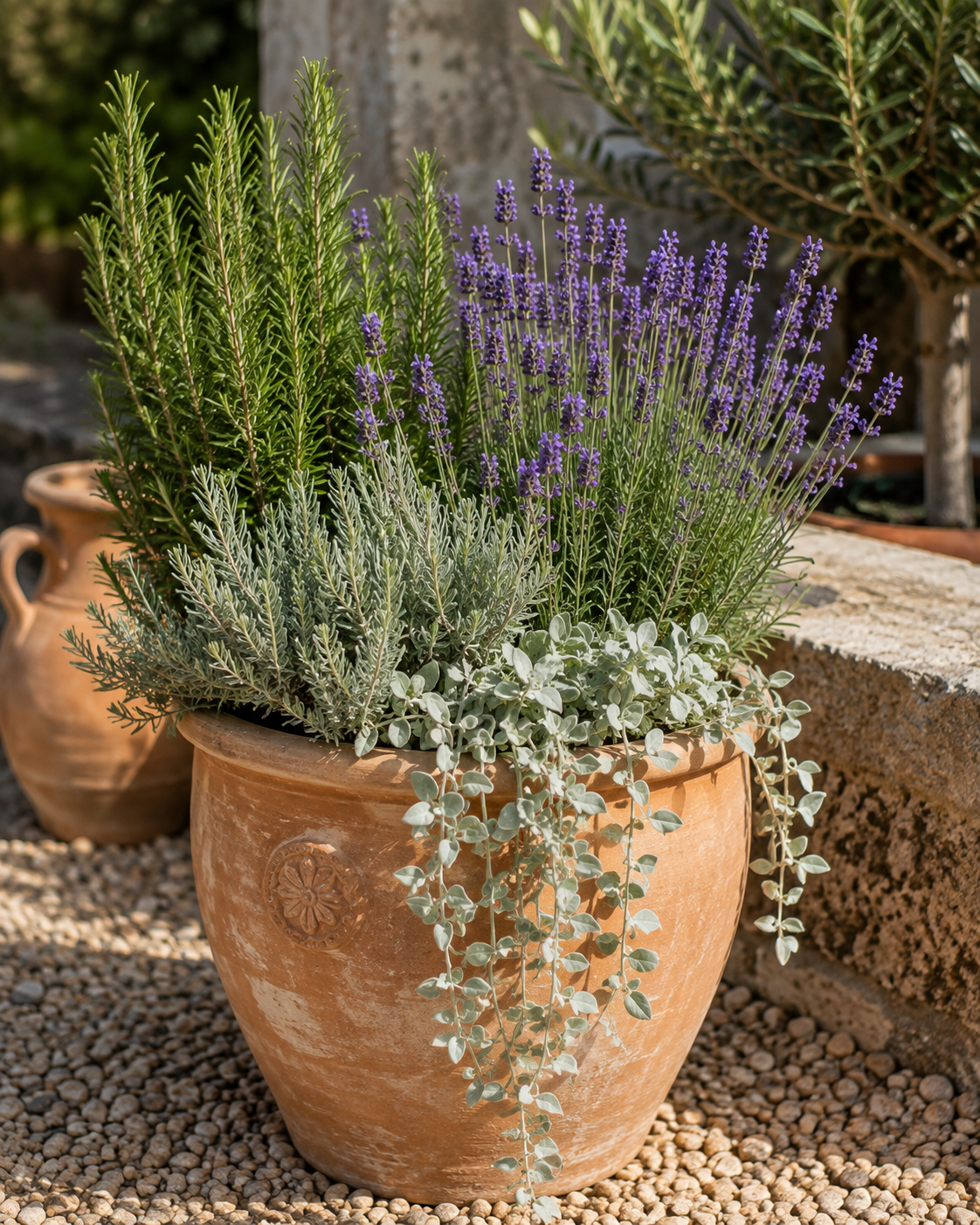
Mediterranean-style planting is one of the most popular responses to hotter, drier UK summers — but there’s a catch most guides skip over: many classic Mediterranean plants actively hate the heavy clay soil common across large parts of the UK. Here’s how to get the look and the drought resilience without losing plants to a wet winter.
Why clay soil and Mediterranean plants often clash
Mediterranean plants evolved in free-draining, often stony or sandy soil, in a climate with hot dry summers and mild, relatively dry winters. UK clay soil is almost the opposite in winter: it holds water, drains slowly, and can stay cold and waterlogged for weeks at a time. Many Mediterranean plants — lavender, rosemary, cistus among them — cope perfectly well with summer drought, but succumb to root rot over a wet winter in poorly draining clay, not the dry heat they’re often chosen for.
This is why some gardeners plant a beautiful Mediterranean border, watch it sail through summer, then lose half of it by the following spring — the problem was never drought tolerance, it was winter drainage.
The real fix: improve drainage before you plant
Rather than avoiding Mediterranean planting on clay entirely, the more reliable approach is improving the soil’s drainage in the specific areas you’re planting into.
- Dig in horticultural grit or coarse sand generously into the planting hole and surrounding area — this is the single most effective change for individual plants
- Raise the bed slightly if planting a whole border, even by just 10–15cm, since a raised profile drains considerably better than flat, low-lying clay
- Avoid double-digging or breaking up a large area of clay all at once — improving drainage plant-by-plant in individual holes is usually more practical and effective than trying to transform an entire bed’s soil structure
- Add grit as a mulch layer on the surface too, not just underground — this keeps the crown of the plant (where stem meets soil) drier, which is often the most vulnerable point for rot
Plant choices that genuinely cope with UK clay
Some Mediterranean-style plants tolerate clay far better than others once drainage around the root zone is improved:
Better choices for clay
- Rosemary (particularly upright varieties) copes reasonably well once drainage is improved at planting
- English lavender (Lavandula angustifolia) is more clay-tolerant than French or Spanish lavender varieties
- Euphorbia (many varieties) genuinely tolerates heavier soil better than most Mediterranean-look plants
- Phlomis copes well with clay once established and adds good structural, silvery foliage
- Santolina (cotton lavender) is more forgiving of heavier soil than many similar grey-leaved plants
Trickier on clay, even with improved drainage
- Cistus (rock rose) is genuinely prone to winter losses on clay, even with grit added
- Certain lavender varieties (French, Spanish) are noticeably less clay-tolerant than English lavender
- Some artemisia varieties can struggle through a wet, cold winter regardless of summer drought tolerance
If you’re drawn to the trickier plants specifically, growing them in raised beds, large containers, or a dedicated gravel garden area see our gravel garden guide sidesteps the clay problem entirely, since you control the growing medium directly.
For a fuller range of options, see our guide to the best drought-tolerant plants for UK gardens.
Getting the Mediterranean look without fighting your soil
- Lean on silver and grey foliage for that sun-baked, Mediterranean feel — santolina, phlomis, and euphorbia all deliver this without the drainage headaches of trickier plants
- Use terracotta pots and gravel mulch as hard landscaping elements, which read as “Mediterranean” visually regardless of what’s growing in the ground beneath
- Group true Mediterranean natives together in the best-draining spot in the garden (often a raised bed, slope, or gravel area), rather than scattering them through borders with unimproved clay
- Save clay-tolerant choices for the rest of the border, so the whole space still copes with a typical UK winter even if it doesn’t achieve total plant-for-plant Mediterranean authenticity
The bottom line
A convincing Mediterranean-style garden is absolutely achievable on UK clay soil — it just requires treating winter drainage as seriously as summer drought tolerance. Improve drainage where it matters most, choose the more clay-forgiving plants for open borders, and reserve the trickier classics for pots, raised beds, or a dedicated gravel area where you control the conditions directly.
Leave a Reply