
If this summer’s left you looking at gaps in your borders, now is a good time to think about what goes back in. UK summers are trending hotter and drier, and the single biggest change you can make to next year’s garden isn’t more watering — it’s choosing plants that don’t need it in the first place.
What makes a plant drought-tolerant
Most genuinely drought-tolerant plants share a handful of physical traits worth learning to spot, so you can judge unfamiliar plants at the garden centre too:
- Silver, grey, or downy foliage — reflects sunlight and reduces water loss through the leaf surface
- Small, narrow, or waxy leaves — less surface area for moisture to evaporate from
- Fleshy or succulent leaves — store water for dry periods (think sedum)
- Deep taproots — reach moisture far below the surface once established
The important caveat: even the toughest drought-tolerant plants need regular watering in their first year while roots establish. The drought tolerance kicks in from year two onwards.
A note most plant lists skip: winter matters as much as summer
Here’s something worth knowing before you buy: many of the most commonly recommended “drought-tolerant” plants aren’t actually that hardy through a cold, wet British winter. Popular choices like certain artemisia varieties, some cistus, and Verbena bonariensis can struggle or die back in harsher inland winters — not from drought, but from winter wet and cold. If you want plants you can rely on long-term rather than replace every couple of years, it’s worth checking a plant’s RHS hardiness rating (H5 and above copes with most UK winters reliably) rather than assuming “drought-tolerant” automatically means “tough.”
Plants worth considering
Lavender (Lavandula angustifolia)
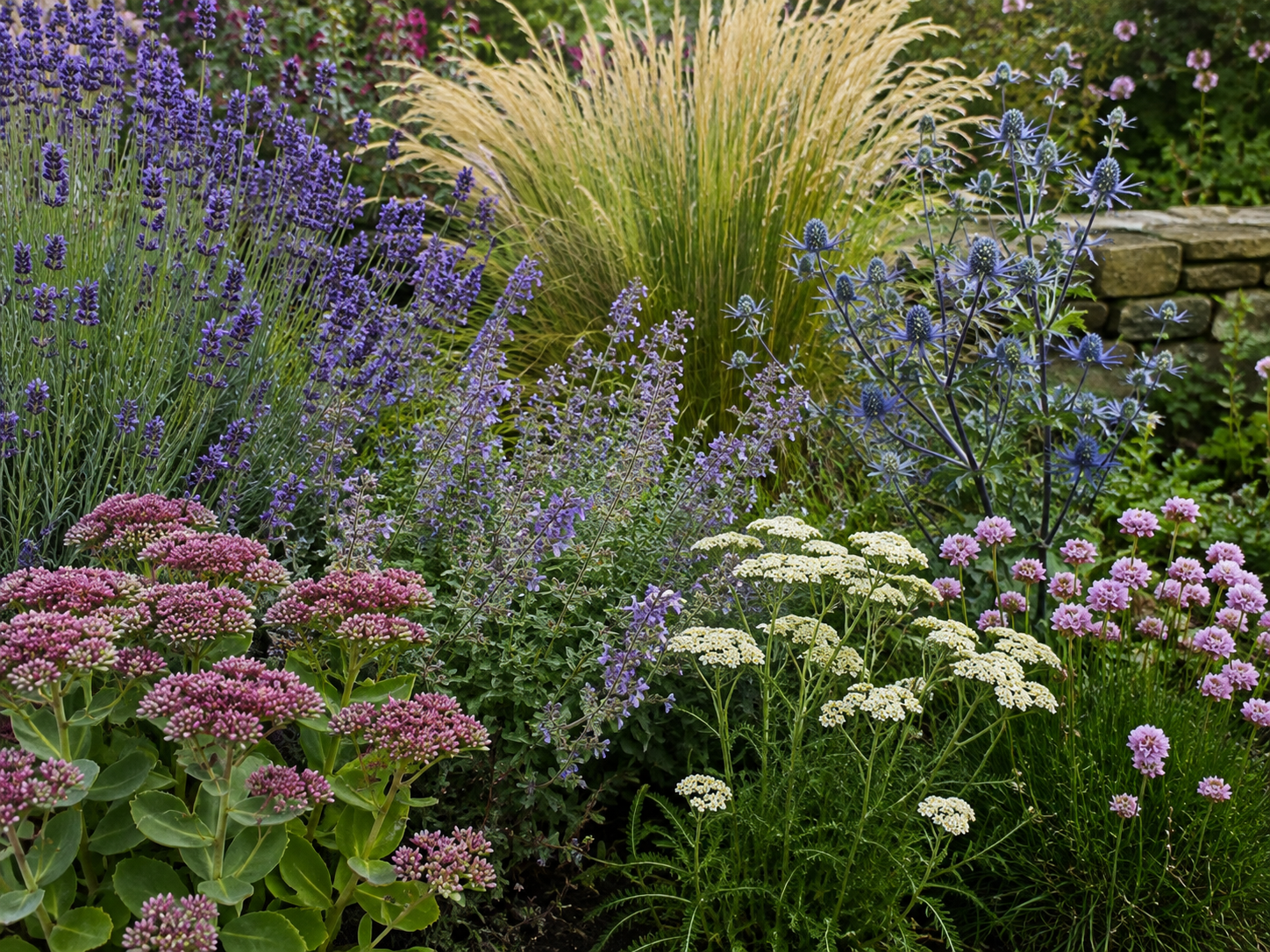
English lavender is the most winter-hardy of the lavenders and copes well with wet UK winters better than some Mediterranean varieties. Silvery foliage, excellent for pollinators, and works well as informal edging or low structure near a path.
Rosemary
A reliable Mediterranean herb that copes reasonably well with UK winters, particularly upright varieties. Useful for height in a border or as an informal aromatic hedge, and doubles as a kitchen herb.
Sedum
Thick, fleshy leaves that genuinely store water — sedums can go weeks without attention. Many varieties turn a rich rust-red in autumn, giving late-season colour when much else has finished.
Catmint (Nepeta)
Soft purple flowers through most of summer, spreads readily without much encouragement, and returns reliably year after year. A low-fuss choice if you want colour without constant upkeep.
Achillea (Yarrow)
Flat-topped flowerheads in yellow, pink, or red sitting on feathery foliage. Copes well in poor soil and thrives on a bit of neglect — water deeply but infrequently, which encourages roots to grow down rather than staying near the surface.
Sea holly (Eryngium)
Spiky, silvery-blue flowerheads that genuinely enjoy hot, dry conditions and even coastal salt exposure. More architectural and unusual than most border plants, and tougher than its delicate appearance suggests.
Ornamental grasses (Stipa tenuissima and similar)
Once established, most ornamental grasses need very little supplementary water and add movement and texture that softer perennials can’t. A good structural backbone for a low-water border.
Sea thrift (Armeria maritima)
Dense, low cushions of foliage that hold their shape well through summer, useful for edging or rockeries, and copes with poor, dry soil without complaint.
Building a garden that copes long-term
- Group plants by water need, not just by colour or season — mixing thirsty and drought-tolerant plants side by side means you either overwater the tough ones or underwater the thirsty ones
- Improve drainage before planting — most drought-tolerant plants dislike sitting in wet, heavy clay over winter far more than they dislike dry summer soil; adding grit or horticultural sand to planting holes helps considerably on heavier UK soils
- Water deeply but infrequently even for drought-tolerant plants in their first year, to encourage deep rooting rather than shallow, surface-dependent growth
- Mulch after planting to lock in moisture and suppress weeds while new plants establish
The bottom line
A drought-tolerant garden doesn’t mean a bare or colourless one — many of the most popular, pollinator-friendly plants in UK gardens already coped well with this year’s heat. The key is checking hardiness as well as drought tolerance, so what you plant this autumn is still there in five years’ time, not just surviving one dry summer before a wet winter finishes it off.
Leave a Reply