
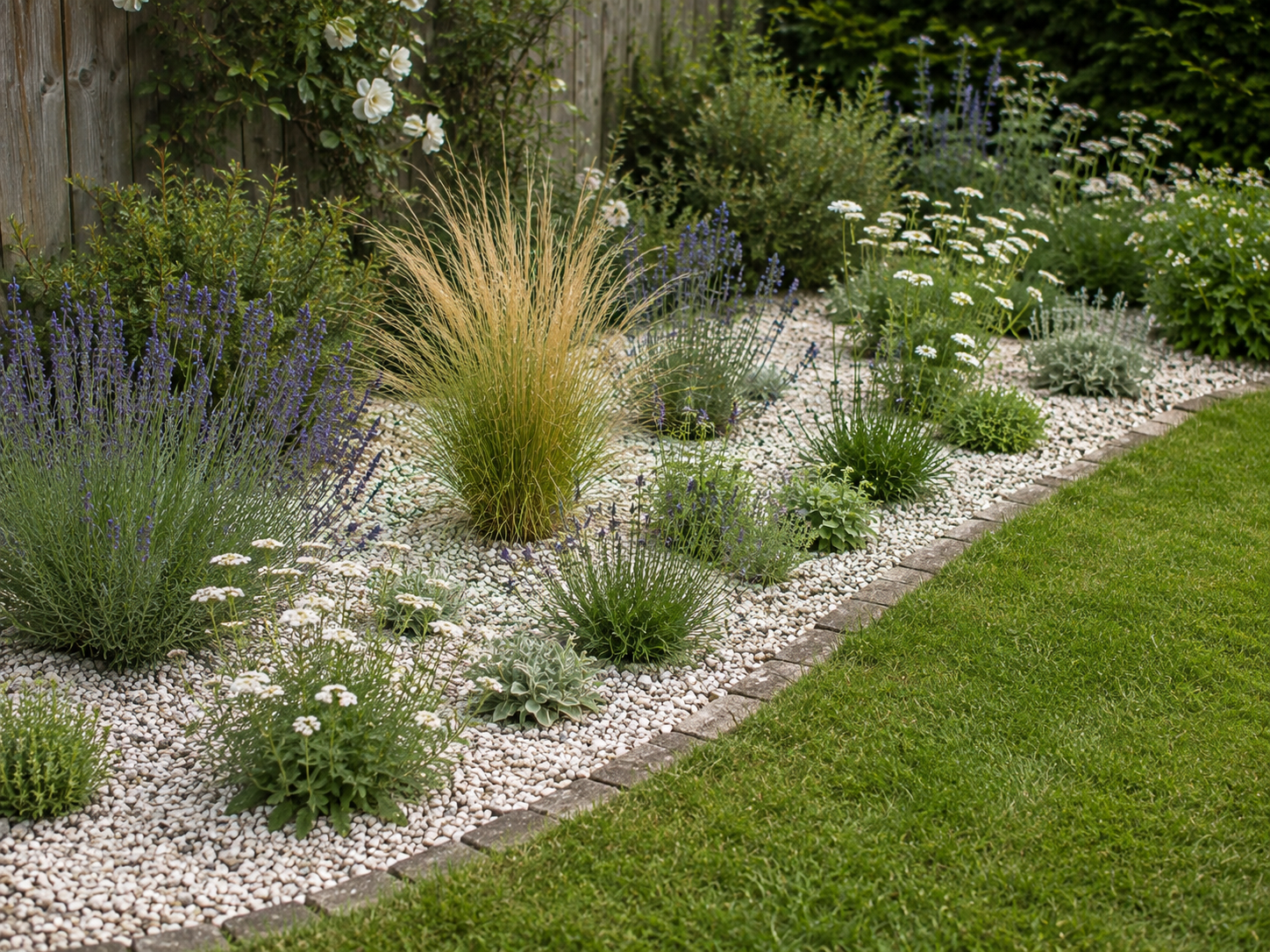
If you’re planning to fill gaps left by this summer’s heat, or finally add the drought-tolerant plants you’ve been meaning to get in the ground, autumn — not spring — is genuinely the better window. It feels counterintuitive to plant right as the weather turns colder, but for building the kind of deep, resilient root systems that cope with next summer’s dry spells, timing now matters more than almost anything else you’ll do.
Why autumn planting builds more resilient plants
The case for autumn planting comes down to root establishment, not top growth. When you plant in spring, a young plant has to cope with establishing roots and surviving its first summer’s heat and dryness at the same time — often before it’s had a chance to develop the deeper root system that makes drought tolerance possible in the first place. Plant in autumn instead, and the roots get several months of mild, moist conditions to establish before they’re ever tested by drought.
Soil temperature plays a big part too. UK soil in September and October is still warm from summer, which encourages active root growth, while air temperatures are cooling — exactly the conditions that favour roots over top growth. By the time next summer arrives, an autumn-planted specimen typically has a root system many months more developed than the same plant put in the ground in spring.
Rainfall reliability matters as well. Autumn generally brings more consistent rain than late spring or early summer, meaning far less supplementary watering is needed to get a new plant established — which matters both for your own effort and for the plant’s ability to develop deep roots naturally, rather than relying on you topping up the surface constantly.
The window that actually matters
Broadly, September through to mid-October is the sweet spot for most UK gardens. Soil is still warm enough to encourage root growth, but there’s enough of the autumn and winter ahead for roots to establish properly before next summer’s demands arrive. Planting much later than this — into November and beyond — still works for many hardy plants, but the closer you get to the first proper frosts, the less time roots have to get going before growth slows right down for winter.
If you miss the autumn window entirely, spring planting is still workable — it’s simply a harder start for the plant, and you’ll likely need to be more attentive with watering through its first summer to make up for the shorter root-establishment period.
What to plant now for next summer’s resilience
A number of proven drought-tolerant choices are particularly well suited to going in now, while conditions favour strong root establishment:
Lavender (Lavandula angustifolia) — English lavender specifically copes well with an autumn start, provided drainage is sorted before planting. Avoid planting into waterlogged clay without amending it first; see our guide on Mediterranean Planting for UK Gardens With Heavy Clay Soil for how to prepare the ground properly.
Rosemary — A reliable choice for autumn planting, particularly upright varieties, and one of the more forgiving drought-tolerant shrubs if conditions aren’t perfect.
Sedum — Established sedum plugs or pots go in easily in autumn and need very little attention once planted, since their thick, water-storing leaves cope well even before a full root system develops.
Ornamental grasses (Stipa tenuissima and similar) — Grasses generally establish well in autumn, using the cooler months to develop root systems before putting on visible top growth the following spring and summer.
Santolina and Phlomis — Both cope well with an autumn start and, once established, need minimal water through subsequent summers.
Achillea (Yarrow) — A strong autumn-planting choice, particularly if you improve drainage in poor or heavy soil beforehand, since Achillea dislikes sitting in wet conditions more than it dislikes dry ones.
For a fuller list of drought-tolerant options and what makes a plant genuinely suited to UK conditions, see our complete guide to drought-tolerant plants for UK gardens.
How to plant for the best possible start
Improve drainage before you plant, not after. This matters even more with autumn planting, since new roots will be sitting through a wet winter almost immediately. Dig horticultural grit into the planting hole and surrounding soil generously, particularly on heavier clay soils.
Water in thoroughly at planting, then let rain take over
Even though roots establish more easily in autumn, a new plant still needs a thorough initial watering to settle the soil around the roots and remove air pockets. After that, UK autumn rainfall usually does most of the ongoing work for you.
Mulch after planting
A generous layer of mulch around (not touching) the base helps retain soil warmth a little longer into autumn, suppresses weeds competing for the same resources, and protects the soil surface through winter.
Don’t feed newly planted specimens
As with any stressed or establishing plant, feeding encourages soft, vulnerable growth at exactly the wrong time. Let the plant focus its energy on root establishment through autumn and winter rather than pushing out new growth it isn’t ready to support.
The bottom line
If this summer left you with gaps to fill or a wish list of drought-tolerant plants you didn’t get round to, don’t wait for spring. Planting now, while the soil is still warm and autumn rain is on its way, gives roots months of head start over a spring-planted equivalent — and that head start is often the real difference between a plant that sails through next summer and one that struggles from day one.
Leave a Reply